MailOps
Get started
For Deliverability Leads

Reputation, made legible.

Bounce mix, suppression and vendor health across every domain — with the receipts.

Get Started

How it works

From spot-checks to certainty

  1. 1

    Watch every vendor

    Delivery, bounce and complaint rates by vendor, domain and category.

  2. 2

    Guard suppression

    One global list keeps chronic complainers and dead addresses out of every provider.

  3. 3

    Catch drift early

    Reputation dips surface while they are still cheap to fix.

  4. 4

    Prove it later

    Exportable delivery evidence makes vendor reviews a formality.

Reputation radar

Per-vendor, per-domain health scores updated from live webhooks.

Suppression guard

Global suppression synced to every connected vendor at once.

Analytics & CSV export

Volume, delivery and bounce rates sliced any way finance asks.

Deliverability stops being vendor folklore and becomes a number you manage.

Incident review

The SendGrid reputation dip that customers never saw

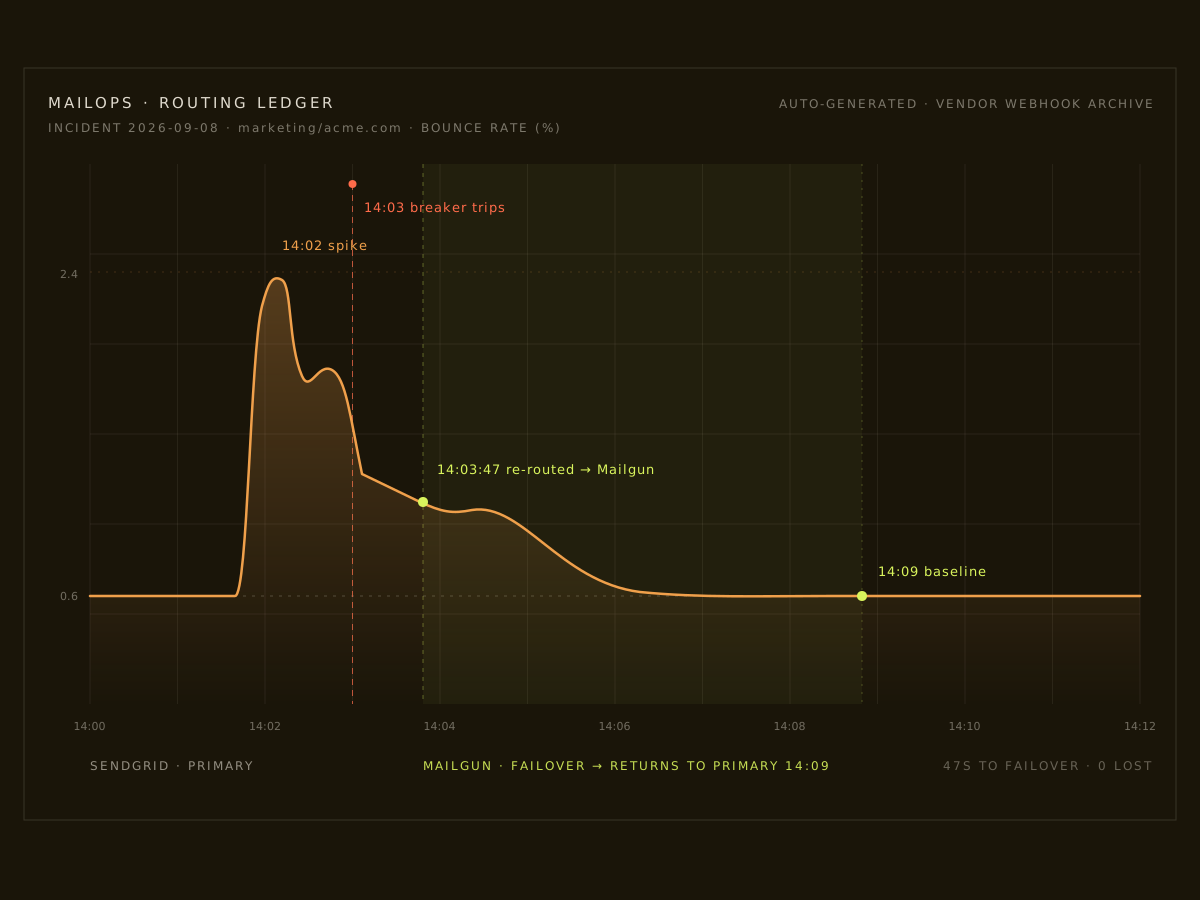
A bounce storm hit marketing traffic mid-campaign. The breaker tripped, TEM took the load, and AI had the postmortem drafted before the stand-up.

47s from spike to failover
0 customer tickets opened
100% of queued mail re-routed

Reconstructed from the routing ledger and vendor webhook archive for the week of the incident.

Routing-ledger chart of the bounce storm: spike at 14:02, breaker trip at 14:03, re-route to Mailgun at 14:03:47, baseline by 14:09
Fig. 01 — bounce storm absorbed: 47 seconds to re-route

Vendors

30+ vendors. One routing brain.

Every provider your stack speaks — SendGrid, Amazon SES, Mailgun, Postmark, Brevo, Mailjet, Resend, Scaleway TEM and more — sits behind one edge. When a circuit breaker trips, MailOps re-routes in under a minute and opens a diagnosis you can approve with one click.